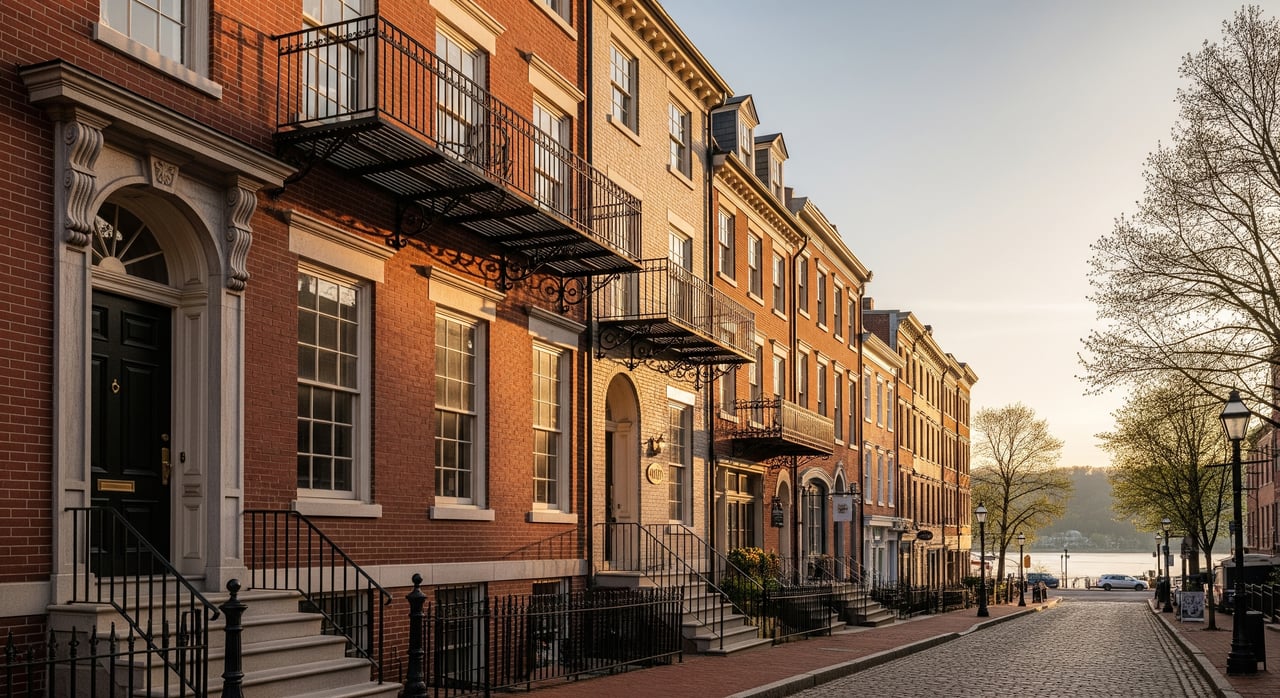
Thinking about moving across the river and wondering what life actually costs in Easton’s Downtown Historic District compared to Central New Jersey? You are not alone. Many buyers see lower list prices in Easton and hope that translates to real savings each month. In this guide, you will learn how to compare the full picture, from mortgage and taxes to insurance, utilities, and commuting, so you can make a confident decision. Let’s dive in.
What drives your monthly cost
Mortgage payment basics
Your monthly payment starts with principal and interest. To compare Easton and Central NJ fairly, use the same down payment, rate, and loan term. Then plug in the purchase price for each home. A lower list price in Easton can reduce this line item, but you should still test multiple price points and rate changes to see how sensitive your payment is.
- Tip: Compare 5, 10, and 20 percent down with a 30-year fixed loan. Run a second pass with rates up or down by 1 percent to see the impact on cash flow.
Property taxes across state lines
Property taxes can tilt the entire comparison. New Jersey’s property tax burden ranks among the highest in the country, while Pennsylvania’s average is generally lower, though it varies by district. For context, review the state-by-state breakdown from the Tax Foundation.
In Easton, your annual bill is built from county, municipal, and Easton Area School District rates. You will want the assessed value and the current millage for each component.
- Where to find it:
- Northampton County parcel records and assessments: Northampton County Assessor
- District information and budget timelines: Easton Area School District
Calculate annual property tax using assessed value multiplied by the total millage, or use the effective rate if provided. Divide by 12 for the monthly amount. For Central NJ, pull the most recent local tax bill or effective rate for the specific town you are comparing.
Insurance and flood risk
Homeowner’s insurance varies by home age, features, and replacement cost. In riverfront cities like Easton, flood risk can add a separate policy if the property sits in a FEMA Special Flood Hazard Area. Always check the property’s flood zone before you write an offer.
- Check flood maps: FEMA Flood Map Service Center
- Learn about flood coverage and NFIP options: FloodSmart, the official NFIP site
- For average homeowner’s insurance guidance and consumer resources, visit the Pennsylvania Insurance Department or the New Jersey Department of Banking and Insurance.
If flood insurance is required, add that premium to your monthly carrying costs. Historic homes may also influence coverage options and pricing, so gather quotes early.
Utilities and internet
Electricity and natural gas rates differ by state and provider. For a baseline, start with state-level data from the U.S. Energy Information Administration. Then layer in local water, sewer, and trash schedules from the City of Easton and your chosen Central NJ town. Internet plans can vary by ZIP code, so compare advertised speeds and pricing from providers serving each address.
Create a simple checklist:
- Electricity and gas unit rates, plus typical monthly usage
- Water and sewer rates, and any fixed service charges
- Trash or recycling fees and pickup schedules
- Internet package speed and monthly rate
Commuting and transportation
Your location choice often comes down to work and travel. Easton connects to I-78, I-476, and LANta bus routes. Central NJ towns may offer shorter rail commutes to job centers. To compare costs, map your exact route and price both fuel and fares.
- Easton bus service and connections: LANta
- Central NJ rail and bus service: NJ Transit
- Track current fuel prices: AAA Gas Prices
Estimate monthly commuting cost:
- Driving: round-trip miles times workdays per month divided by vehicle MPG, times average gas price, plus parking or tolls
- Transit: monthly pass or typical fare totals, plus park-and-ride if applicable
Maintenance and HOA considerations
Older homes in the Downtown Historic District can have unique charm and materials. They can also require more upkeep. A common rule of thumb is to reserve 1 to 3 percent of the home’s value per year for maintenance. If the property is a condo or part of an association, add the monthly fee. In a historic district, exterior work may need specific materials and approvals, which can influence cost and timelines.
Income and sales tax impact
Your take-home pay affects your comfort level with a payment. Pennsylvania and New Jersey have different income tax rules and deductions. If you are moving across state lines, review your net income under each system for a clean apples-to-apples comparison. This step helps you set a realistic budget and debt-to-income ratio for mortgage pre-approval.
Downtown Easton Historic District specifics
Property assessments and millage
In Easton, your tax calculation begins with the county assessment. Assessed values may not match market value exactly, so look up the parcel first and then confirm the current millage for the city, county, and school district.
- Parcel searches and tax records: Northampton County Assessor
- School district information and budget calendars: Easton Area School District
Review whether any homestead exclusions apply to your situation. If you are comparing to a Central NJ town, pull that town’s latest tax rate and typical annual bill for similar homes.
Flood zones and elevation
Easton sits at the confluence of the Delaware and Lehigh Rivers. Some blocks near the river have mapped flood risk. Before you commit to a property, check the FEMA Flood Insurance Rate Map and request any available elevation certificate from the seller. If the property falls in a Special Flood Hazard Area, your lender will likely require flood insurance.
- FEMA maps: FEMA Flood Map Service Center
Utilities, trash, and parking
Downtown homes can have different water, sewer, and trash schedules than suburban areas. If you plan to keep a car, review on-street permit rules and monthly garage rates. These everyday costs can add up and should be part of your monthly plan. Ask sellers for recent utility bills to benchmark typical usage.
Historic district rules
Exterior changes in the Historic District are reviewed to protect the neighborhood’s character. That can include windows, roofing, masonry, paint colors, and signage. Knowing the process early helps you plan budgets and timelines without surprises.
- Review design guidelines and commission contacts: City of Easton Historic District Commission
A simple framework to compare Easton vs Central NJ
Inputs to gather
Collect the same inputs for each property you are comparing:
- Purchase price, down payment, interest rate, and term
- Assessed value and the latest tax bill or total millage
- Homeowner’s and flood insurance quotes
- Local utility rates and typical usage
- Internet plan and monthly cost
- Commute route, fuel price, MPG, parking, and transit fares
- HOA fees and a maintenance reserve percentage
- Your estimated net income under each state’s tax rules
Monthly cost template
Use this template to build your total monthly picture for each home:
- Mortgage principal and interest
- Property tax divided by 12
- Homeowner’s insurance
- Flood insurance if required or recommended
- HOA or special district fees
- Utilities: electricity, gas, water, sewer, trash, internet
- Maintenance reserve: home value times 1 to 3 percent, divided by 12
- Commute cost: fuel, parking, tolls, or transit fares
- Total monthly housing-related cost
Three real-world scenarios
- Scenario A: Local commuter. You put 20 percent down on a Downtown Easton home and drive to work in the Lehigh Valley. Compare to a Central NJ home where you drive a shorter distance. Test how a 1 percent interest rate change affects your monthly total.
- Scenario B: NYC commuter. You put 10 percent down and plan to use a park-and-ride plus NJ Transit to Manhattan. In Easton, factor a longer drive to the rail hub, parking, and monthly pass. In Central NJ, expect higher taxes and purchase price but a shorter rail ride.
- Scenario C: Historic renovation buyer. You purchase a character home at a lower price but set a higher maintenance reserve and include a flood insurance line. Compare to a newer Central NJ home with a possible HOA fee instead of higher maintenance.
Touring Easton and doing due diligence
Pre-tour homework
- Pull 1 to 3 Downtown Historic District listings and note parcel IDs
- Download the assessment record and the most recent tax bill
- Check the FEMA map for each address and note the flood zone
- Map your commute and test travel time during peak hours
On-the-ground checklist
- Exterior condition: roof, gutters, masonry, and signs of water intrusion
- Parking: on-street permit rules and the nearest garage options
- Systems: visible HVAC age, gas hookups, and municipal meter locations
- Noise and activity: visit daytime and early evening to understand patterns
- Essentials: proximity to grocery, pharmacy, and medical services
Commuting tests
- Ride a LANta route if it matches your routine
- Price out the right NJ Transit pass for your schedule
- Estimate fuel cost using AAA Gas Prices
What this means for your decision
A lower list price in Easton can be a real advantage, especially when combined with Pennsylvania’s typical property tax structure. At the same time, you may face longer NYC commute times and the extra care that historic homes often need. Central NJ may offer shorter rail access and newer housing stock in some towns, with higher taxes and purchase prices. The best choice is the one that fits your budget and your lifestyle every month.
If you want a local, data-driven plan, we are here to help. We work both sides of the river every day and can pull parcel records, confirm millage, coordinate insurance quotes, and map your real commute. Ready to compare homes side by side and feel confident about the numbers? Connect with Adrienne Ward to Find Your Property Match.
FAQs
Is Easton generally cheaper than Central NJ?
- Often yes on purchase price, and sometimes on total monthly cost, but you should compare the full picture that includes taxes, insurance, utilities, commuting, and maintenance.
Will my property taxes be lower in Easton than in Central NJ?
- Pennsylvania’s average property tax burden is generally lower than New Jersey’s, but your actual bill depends on local millage and assessed value, so pull the parcel record and rates for each property.
How do commuting costs to NYC compare from Easton vs Central NJ?
- Easton usually has a longer trip and may include driving to a rail hub plus a transit pass, while many Central NJ towns offer shorter rail rides with higher housing and local taxes.
Are historic homes in Easton more expensive to maintain or insure?
- Often yes, because older systems and approved exterior materials can increase costs; get contractor estimates and insurance quotes early, and check flood risk.
How can I check flood risk for a specific Easton property?
- Look up the address on the FEMA Flood Map Service Center, request any elevation certificate, and ask an insurer for flood quotes based on that data.